
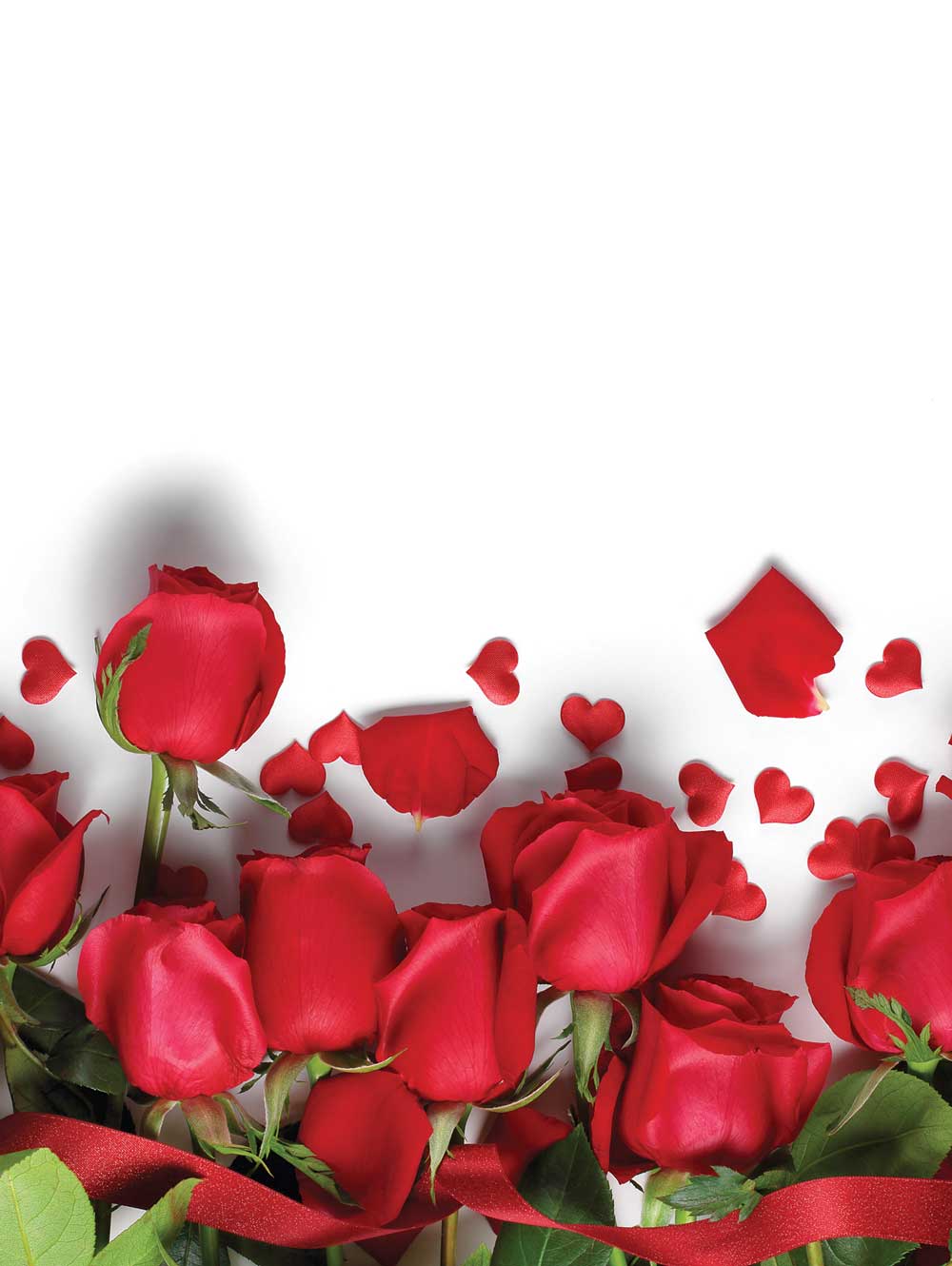
Sweet Red Roses
They are the most famous flowers, given with love all over the world. We admire their beauty, touch their velvety soft petals and close our eyes when their sweet aroma wafts through the air… We express our love, sorrow or sympathy with roses. We grow them in our gardens, and peek enviously over fences to check out the neighbours’ blossoms.
As hardy perennials, roses grow back year after year, and can indeed live for a very long time. Roses were grown in ancient China in 500BC, and there are even rose fossils dating back millions of years. The oldest rose in the world is believed to be the Rose of Hildesheim in Germany, the Thousand Year Rose.
Roses can grow very large and tall, with Grandiflora being the largest of the modern varieties. The name, which means ‘large flower’ in Latin, comes from crossing the floribunda rose with the hybrid tea rose.
All this beauty of the rose comes at a price… or rather, with some thorns attached. So why do roses have prickly thorns? The answer is to deter animals (herbivores) from eating them. Over the many years of evolution, roses, together with other plants developed thorns as a sophisticated defence mechanism.
Another interesting aspect of roses is that they produce small berry-shaped fruits known as rose hip, or rose haw. They begin to form after successful pollination of the flower and ripen in late summer and autumn to red or deep orange colour. The seeds contained inside the rose hips are used for propagation of roses, but some varieties are also used for medicinal purposes due to their high content of vitamin C, lutein, beta-carotene, lycopene and zeaxanthin. Rose hip tea, jam, jelly, marmalade, bread, and even wine are all made from the small fruits of roses.
While red remains the most popular colour, there are over 1,000 different varieties of roses. The world has been fascinated with the Black Halfeti Rose, a cultivar that only grows in a small Turkish village called Halfeti. The local soil’s unique qualities and pH level result in what appears to be a black rose; however, on close inspection it is actually very dark red.