Into The Vale

A local quality bi-monthly Nottingham magazine with news, business adverts and editorials.

  • Home
  • Magazine
  • Advertising
    • Advertisers in this Issue
  • Contact

Getting Fruity on the Allotment – by Maisie Swain

Getting Fruity on the Allotment – by Maisie Swain

27 June 2025 by Sophie Brewill

It’s not only the humble potato or common carrot that can thrive on allotments – you can also grow a abundance of delicious soft fruits like summer berries and blackcurrants.

What’s more, fruit bushes and trees are long-lived. Gooseberries and blackcurrants can do well for 20 years, trees can produce for decades and raspberry canes can last more than 10 years.

Summer fruits are generally easier to care for than larger fruit trees. Many currants can be grown as bushes, while raspberries and blackberries need to be trained against a framework structure, usually a post and wire system. If you are growing bushes or training trees, plan them as part of the structure of your allotment, as they are likely to be permanent fixtures. Most fruit trees are pollinated by insects so you’ll need to avoid windy sites, and add plenty of organic matter to the soil, which needs to be well-drained.

Few allotments allow trees to be grown because they shade other plots and sometimes can’t be moved when a new tenant arrives. So if you want to grow fruit trees, you may have to buy dwarf rootstocks to train, creating espaliers, cordons or fans in sunny spots.

Redcurrants, white currants and gooseberries can be fan-trained and turned into espaliers and cordons. You could train them up the side of a shed or make a support from stakes and training wires. Fruit which is trained takes up less room and is easier to manage because the fruit has air and light around it so there are likely to be fewer disease problems. Be warned that blackcurrants are big plants which will need plenty of room, each taking up around 1.5 square metres of ground, so don’t plant them too close together.

Unless you live in a really mild area and your plot is sheltered, avoid trying to grow tender fruits such as figs, apricots and peaches on your allotment, as they will need so much protection.

All soft fruits should be planted in a sheltered spot away from frost pockets. Choose late varieties to help avoid frost damage and make sure you net the fruits from the birds. A fruit cage is essential and should be allowed on allotments as it is classed as a temporary structure.

Avoid planting soft fruit where it has been grown before as it can lead to replant disease, resulting in stunted growth. Buy stock which has been certified free of pests and disease to avoid the fatal viral disease.

As for placing your plants, keep all your fruit bushes together as a group in a south or west-facing spot where they will receive the maximum sun. Put your raspberries at the back because they grow tall, then plant blackcurrants, white currants and gooseberries in front and strawberries right at the front.

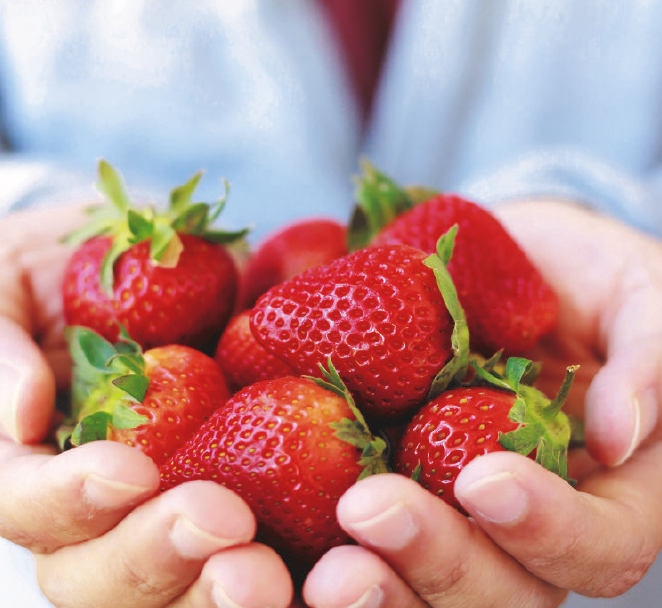
Strawberries, one of the national favourite summer fruits, should be placed in the sunniest border and should be moved around on a three-year cycle. For success with strawberries, grow them in well-drained, moisture-retentive, humus-rich soil, adding lots of well-rotted compost or manure and a sprinkling of phosphate, and make sure they’re in a sunny spot. Strawberries should be planted in late summer as they need a period of cold to flower and fruit the following year.

Plant the crown at soil level and keep the area well-weeded, or grow them through weed-suppressing horticultural plastic. Strawberries should not be watered from overhead, as moisture on the fruits can rot.

Growing fruit on your allotment may take a little patience as many types will not bear fruit the same year they are planted (summer raspberries, blackberries and gooseberries will fruit in the second year and redcurrants in the third), but once established, they will not let you down.

Filed Under: Featured Articles

More Articles

Spring’s Quiet Transformation in the Countryside

Thirty Years of Care, Compassion & Community

Getting Back into Gardening after the Winter Break

Keeping Pets Safe During Spring Cleaning Time

The Benefits of Following a Home Exercise Routine

Contact Us

Tel: 01949 20009
Mob: 07786 968132

Terms of Business

You can download a copy of our terms of business here and our Privacy Policy here

Deadlines

Next Issue: May/June 2026
Copy Deadline:
Monday 20th April

Copyright Into The Vale 2022 | Theme: Into The Vale by Reveal Web Solutions - Nottingham.
We use cookies on our website to give you the most relevant experience by remembering your preferences and repeat visits. By clicking “Accept All”, you consent to the use of ALL the cookies. However, you may visit "Cookie Settings" to provide a controlled consent.
Cookie SettingsAccept All
Manage consent

Privacy Overview

This website uses cookies to improve your experience while you navigate through the website. Out of these, the cookies that are categorized as necessary are stored on your browser as they are essential for the working of basic functionalities of the website. We also use third-party cookies that help us analyze and understand how you use this website. These cookies will be stored in your browser only with your consent. You also have the option to opt-out of these cookies. But opting out of some of these cookies may affect your browsing experience.
Necessary
Always Enabled
Necessary cookies are absolutely essential for the website to function properly. These cookies ensure basic functionalities and security features of the website, anonymously.
CookieDurationDescription
cookielawinfo-checkbox-analytics11 monthsThis cookie is set by GDPR Cookie Consent plugin. The cookie is used to store the user consent for the cookies in the category "Analytics".
cookielawinfo-checkbox-functional11 monthsThe cookie is set by GDPR cookie consent to record the user consent for the cookies in the category "Functional".
cookielawinfo-checkbox-necessary11 monthsThis cookie is set by GDPR Cookie Consent plugin. The cookies is used to store the user consent for the cookies in the category "Necessary".
cookielawinfo-checkbox-others11 monthsThis cookie is set by GDPR Cookie Consent plugin. The cookie is used to store the user consent for the cookies in the category "Other.
cookielawinfo-checkbox-performance11 monthsThis cookie is set by GDPR Cookie Consent plugin. The cookie is used to store the user consent for the cookies in the category "Performance".
viewed_cookie_policy11 monthsThe cookie is set by the GDPR Cookie Consent plugin and is used to store whether or not user has consented to the use of cookies. It does not store any personal data.
Functional
Functional cookies help to perform certain functionalities like sharing the content of the website on social media platforms, collect feedbacks, and other third-party features.
Performance
Performance cookies are used to understand and analyze the key performance indexes of the website which helps in delivering a better user experience for the visitors.
Analytics
Analytical cookies are used to understand how visitors interact with the website. These cookies help provide information on metrics the number of visitors, bounce rate, traffic source, etc.
Advertisement
Advertisement cookies are used to provide visitors with relevant ads and marketing campaigns. These cookies track visitors across websites and collect information to provide customized ads.
Others
Other uncategorized cookies are those that are being analyzed and have not been classified into a category as yet.
SAVE & ACCEPT