
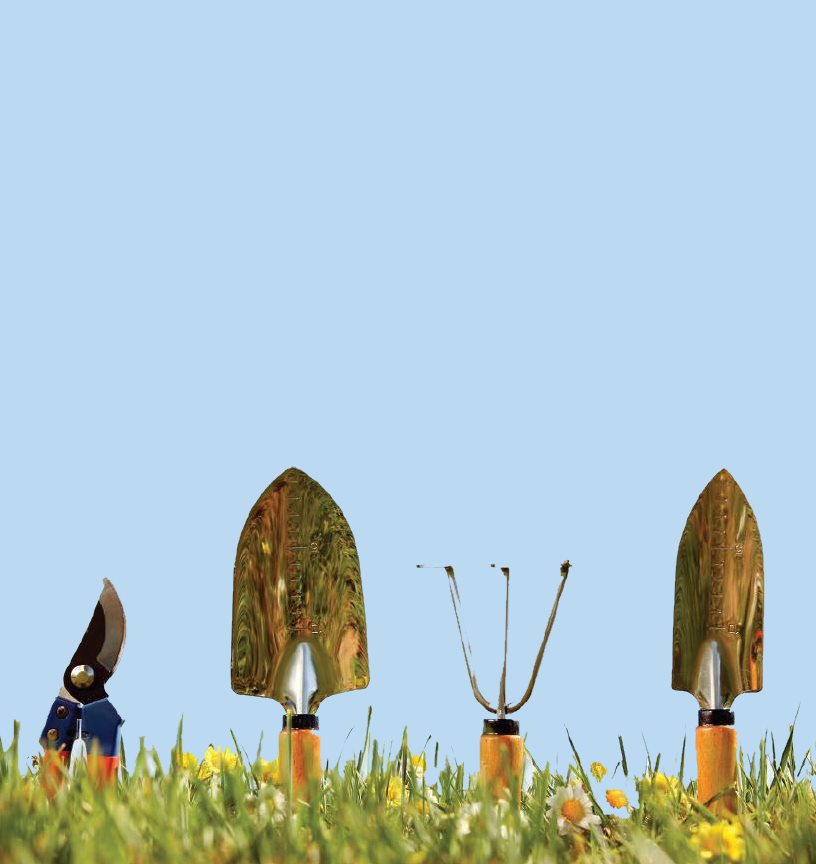
Prepare for spring by checking out your gardening tools. Give your existing ones a good clean and write a list of essentials which need replacing.
If you are buying new tools this year, generally go for the most expensive spades and forks you can afford, preferably stainless steel, which will last much longer than other cheaper materials. Also, make sure the items are suitable for your size. More petite gardeners can buy shorter, smaller spades and forks for easy manoeuvre.
Anne Swithinbank, co-author of BBC Gardeners’ Question Time Techniques & Tips For Gardeners, says: “Before buying, always ‘weigh’ a new spade or fork in your hand. Work the blades of shears and move them from hand to hand. Grip secateurs, play with the open and shut mechanism and try the handles. Only buy if the tool feels comfortable and you think it will easily become an extension of your body.”
If you are on a tight budget, ask your relatives if they’ve any spares before buying or check out any local second-hand shops which might sell gardening tools that have been mended and sharpened for resale and are often of good quality.
Don’t let your existing equipment become pitted with rust before doing anything about it. Blades of cutting tools need to be wiped with an oily rag after each use, but once a year you should use wire wool to remove rust or dried sap, which makes the cutting surfaces sticky, then oil the blades lightly. Be aware that viral and bacterial diseases are easily spread from plant to plant by contaminated sap on secateurs, knives and saw blades. Paraffin oil will remove most sap stains. Every few weeks apply a few drops of light oil to moving parts such as springs, pulleys and bolts.
If you have tools with wooden handles, maintain them by oiling the wood with a little linseed oil every few weeks, keeping a soaked rag handy so you can rub it down regularly. Give knives and secateurs an oil twice or three times a year and again before spring. It’s also handy to keep a small sharpening stone on your kitchen windowsill for sharpening the blades now and then. Tighten the blade tension of garden shears to improve their cutting ability.
Once your garden tools are in order you need to set yourself some rules about looking after them. Don’t be lazy and leave them out overnight – you need to put them away every evening after use. If you find loading them into the shed a chore, bang a few nails into the shed wall to hang them on and keep the floor area free. Make or buy yourself a small wooden scraper to keep in your pocket or gardening apron so you can just clean the mud off quickly before putting them away. Secateurs should be left with the blades open to dry thoroughly before putting them away, if possible.