
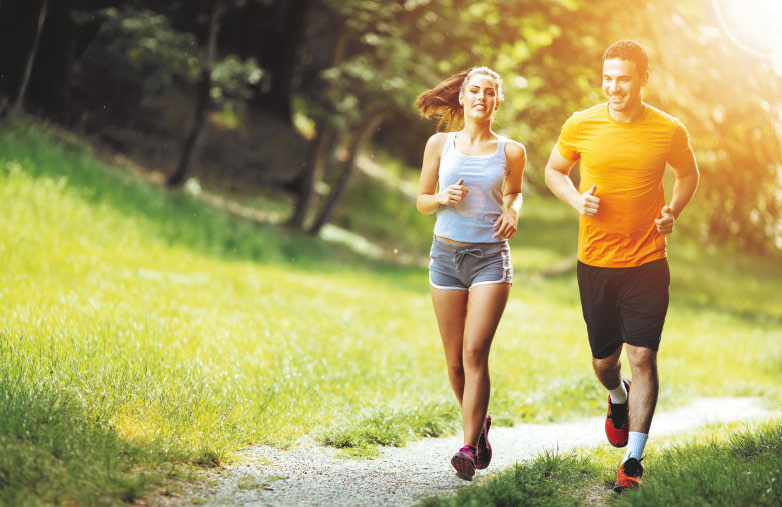
Exercise and physical activity are important components of a healthy lifestyle. While many of us choose to exercise in gyms and indoor facilities, there are some advantages for both our physical and mental health when it comes to training outside. The fresh air, natural surroundings, sunlight and scenery can make outdoor exercise an incredibly enjoyable and rewarding experience. Here are some bonus benefits of exercising outdoors.
Vitamin D production – Vitamin D is a particularly important micronutrient that we can get from sunlight exposure on our skin. Vitamin D has a variety of roles which include helping absorb the mineral calcium, and supporting your immune and nervous systems. A lack of vitamin D can lead to the development of bone diseases like osteoporosis and rickets. Depending on geographical location and occupation, it may be hard to get enough vitamin D exposure. Choosing to exercise outside during the daytime hours may help with this.
Cardiovascular health – Aside from the production of vitamin D and the stimulation of your cardio-respiratory system through exercise, daylight exposure may contribute to better blood vessel health by stimulating nitric oxide, which can have a positive impact on blood pressure and overall cardiovascular health. Daylight exposure also helps the body regulate its circadian rhythm and promote better quality sleep which can translate into better overall physical and mental health.
Stress benefits – Spending time in nature can improve psychological wellbeing and there is now evidence to back this up. Research suggests that participating in activities like forest walking can improve not only cardiovascular health but also psychological health by improving mood and reducing anxiety. Another study has suggested that exercising outdoors in natural environments is associated with greater feelings of revitalisation, positive engagement, as well as decreases in tension and depression when compared with exercising indoors.
Musculoskeletal benefits – Many outdoor activities like walking, hiking, running and field sports all promote human gait. What does this mean? This is the sequence of coordinated movements our muscles and joints go through to move our bodies. Participating in activities that involve gait can improve intermuscular coordination, strength, mobility, endurance and promote bone health.
Variety – There is plenty of choice when it comes to exercising outdoors. Ultimately, it boils down to preference and geographical location. Walking is the most accessible and studies have suggested that even a modest increase in daily steps is associated with a lower risk of death, but there are many other forms of exercises you can choose to do outside. Hiking is a great way to expose yourself to natural surroundings. Cycling can be an enjoyable experience for many. Others may like swimming, golf or tennis. Some people prefer adventure sports like kayaking or stand-up paddling, others might prefer outdoor sports like surfing, skiing or mountain biking. The style and intensity of exercise is up to the individual. For something more restorative, gentle forms of Yoga and Pilates or exercises like Tai Chi can be performed outside too.
While these are some bonus benefits of exercising in the outdoors, it is important to note that exercise and physical activity are extremely positive for your health, irrespective of whether they are carried out inside or outside. Choose a physical activity that best suits your schedule, your level of fitness and your life.