
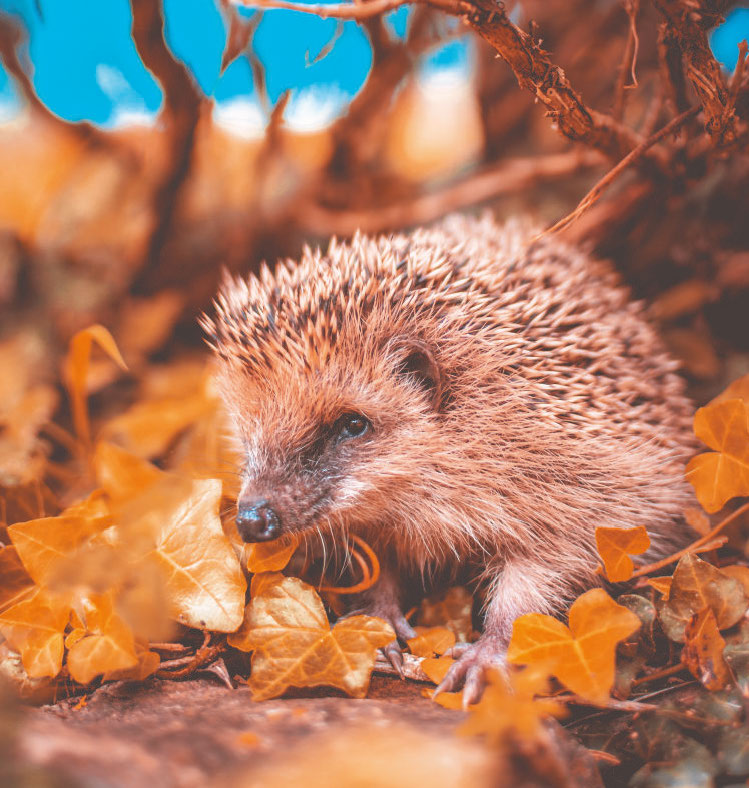
As the first crisp mornings of autumn start to arrive, our gardens begin their seasonal transformation. For wildlife, this is a time to stock up, shelter down, and prepare for the colder months ahead. With a few thoughtful touches, you can turn your garden into a sanctuary that supports birds, insects, and small mammals through the months to come.
Provide Autumn Food Sources
In September, many natural food supplies are dwindling, so topping up bird feeders is a big help. Offer high-energy foods such as sunflower hearts, suet blocks, and peanuts to give birds the calories they need before winter. If you have berry-producing plants like hawthorn, rowan, or pyracantha, avoid trimming them — they’re a vital source of food for thrushes, blackbirds, and migrating redwings later in the season.
Create Shelter and Safe Havens
Autumn is when hedgehogs start building nests for the winter. Leaving a quiet, undisturbed corner of your garden with leaves, logs, or brushwood can provide ideal shelter. If you’re tidying flowerbeds, think twice before cutting everything back — seed heads from plants like teasel and echinacea provide both food and cover for birds and insects. A log pile will attract beetles, fungi, and hibernating amphibians, all of which contribute to a healthy garden ecosystem.
Keep Water Available
As the weather cools, it’s easy to forget that wildlife still needs a clean water supply. Bird baths should be kept topped up and free of ice as we head into the colder months. A shallow dish at ground level will help hedgehogs, and adding a few pebbles or stones will benefit bees and other insects. Light the Night Thoughtfully
Many garden visitors, such as moths, bats, and hedgehogs, are nocturnal. Outdoor lighting can disturb their natural behaviour, so consider using motion-sensor lights or limiting the hours they are switched on. This small change can make your garden much friendlier for night-time wildlife.
Avoid Chemicals
Pesticides and herbicides can harm beneficial insects and disrupt the food chain. If possible, opt for organic gardening methods. Fallen leaves can be left on borders as natural mulch, reducing the need for weed control while providing valuable habitat for invertebrates.
Plant for the Season Ahead
Early autumn is a great time to plant spring bulbs such as crocus, snowdrop, and allium, which will provide early nectar for bees when they emerge from hibernation. Native shrubs and trees like hazel, dogwood, and crab apple offer food and shelter for years to come, making them an ideal long-term investment in local biodiversity.