
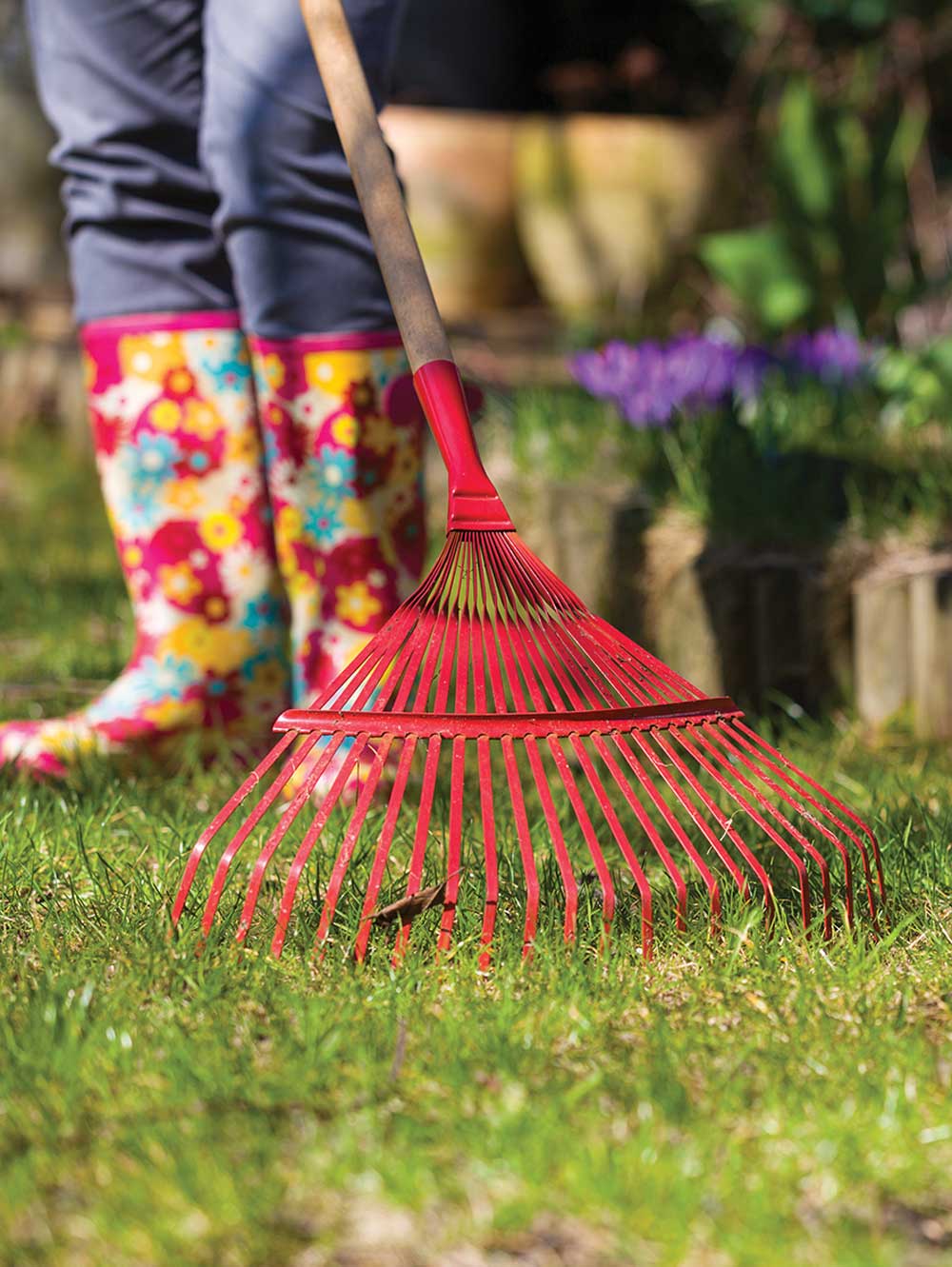
During the current lockdown, now is a perfect time to spend a few hours a week in the garden. Raking leaves, digging, weeding and moving shrubs can all help you to tone up.
Raking and forking helps strengthen arms and shoulders and tones the abdominal muscles, while digging and bending (from the knees, keeping the back straight) to move or lift plants or pots can help tone thighs and buttocks.
Weeding beds and borders gives the legs, hips and buttocks a good workout if you squat while you weed. Heavier work such as clearing brush and stacking wood can give you the equivalent workout to a light aerobics class.
Get down as low as you can so that your bottom is as close to your heels as it can be. From that position you can still do your gardening rather than getting down on your knees. When you stand up from this position you will be using your joints to their maximum range of movements.
From a squat position you can weed or plant and each time you move along a border you stand up, stretch and then squat again.
With deep squats, you use the biggest muscles in your body – leg, thigh and hip muscles – and will aid lymphatic drainage, pumping out toxins as you completely rely on muscular movement for this.
In between other tasks, take time to find a high sturdy branch of a tree and just hang from it to take your body weight. It’s great for posture and is good for shoulder strength.
Gardening can help the cardiovascular system, reduces the risk of high blood pressure, heart disease, diabetes, obesity and other medical conditions as well as burning calories.
Half an hour’s digging can use up 250 calories, weeding will burn 105 calories, raking 100 calories and mowing the lawn 195 calories, so those garden chores you’ve been putting off may help you squeeze into those jeans which have been on the tight side.
“Changing the type of garden tools you use can also influence the number of calories burned and will also have cardiovascular benefits,” says award-winning garden designer David Domoney, who offers tips on how to get fit gardening on his website .
“For example, use a rake instead of a leaf blower, take extra long strides while raking or use short, quick motions, and keep the rake close to your body, switching sides every two to three minutes.”
Go for a push mower if you want a more strenuous workout, rather than a power mower which will make the job easier.
Gardening will not only help you physically, but psychologically too. Working in the fresh air and being among trees and plants reduces stress and relieves muscle tension, studies have shown.
Remember your limitations, though. Many gardeners worry that too much lifting in the garden will damage their backs. Obviously, if you are attempting to move a really heavy object, ask for help.
“You need to keep an ‘S’-shaped spine position when lifting, sweeping or raking, changing sides regularly. Stand with your back against a wall, with your head, shoulder blades, heels and the base of your back (coccyx) also touching the wall. That will give you an idea of the ‘S’ spine position.
“Keep your shoulders back and look at the horizon, not downwards, when you squat, to hold the position,” says Domoney.
Work at a steady, constant speed to keep heart rate up at a set level and don’t do too much of one thing – three hours’ digging is likely to result in a lot of aches and pains.
Change positions regularly to move from pruning to weeding or try to alternate which hands you use.
Do the less strenuous gardening chores such as tidying up or a little light pruning to warm up and get the muscles moving and the same when you cool down, he advises. If you tire halfway through, take a break.
“Listen to your body. Don’t wear yourself out because that’s mainly when you’ll injure yourself,” Domoney adds.
Working in the garden may not replace the gym all year round, but it is a great way to improve your fitness and health while doing something incredibly rewarding.