
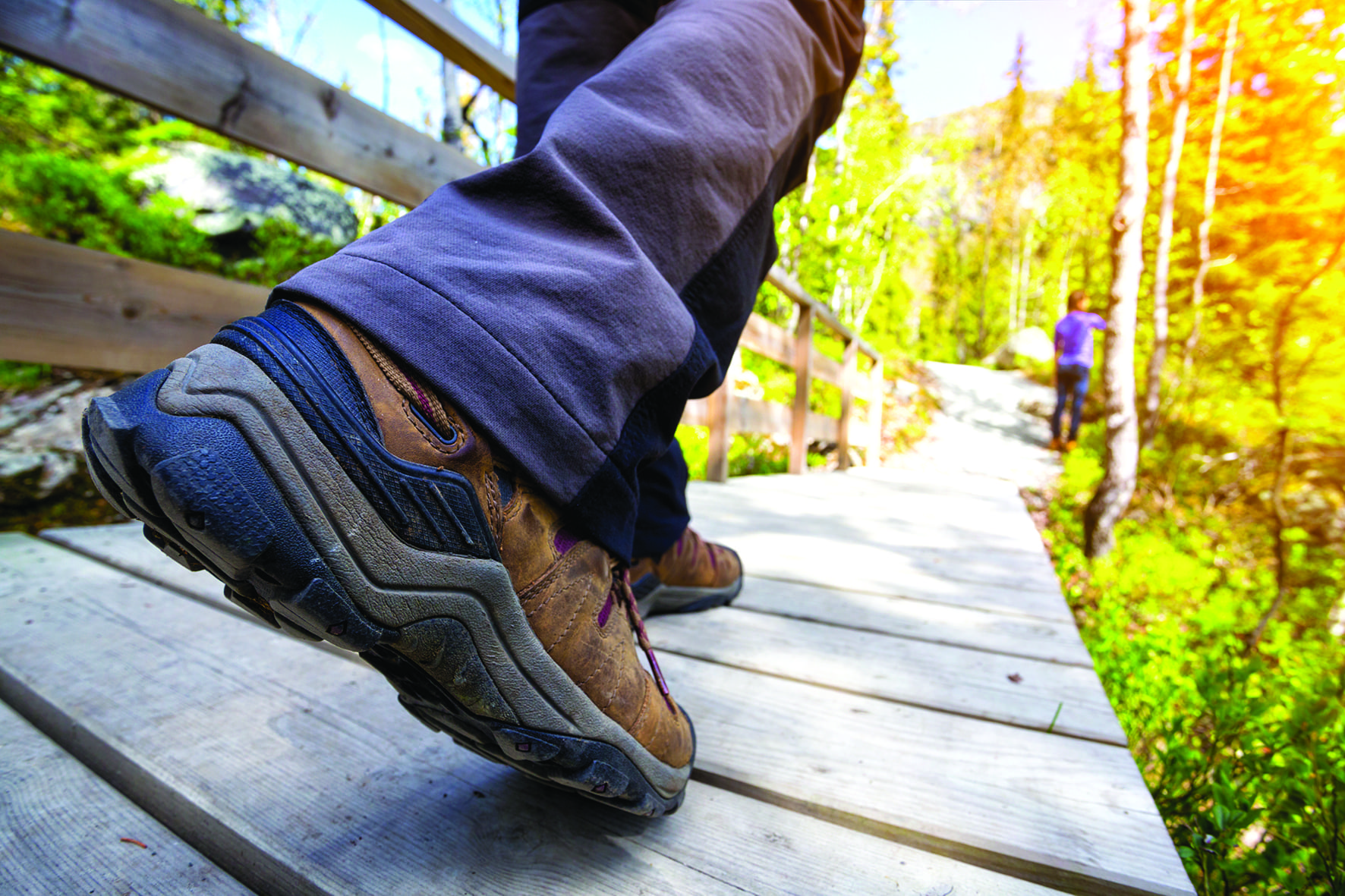
If you think walking is over-rated or that you don’t have time for it, think again.
The benefits of regular walking are many, and even if you don’t need to lose weight, it can still help you live a healthier life – walking has been shown to lower the risk of heart disease, stroke and even some types of cancer, and it’s good for the soul too. Presuming you go for a walk outdoors rather than on a treadmill, being surrounded by nature will calm your body and mind, and help you manage stress. Better still, it’s really never too late to start and unlike some other forms of exercise, walking is free.
How much should we walk?
Although the aim of 10,000 steps a day has been promoted as a benchmark for health improvement, you can benefit from far less than that – even those with a sedentary job can achieve 3,000 to 4,000 steps on an average day. If you can add another form of activity to your day, for instance house chores or gardening, the 10,000 steps becomes a lot easier to achieve.
You could set a goal of 10,000 steps on days when you do no other activity, and simply walk less on the days when you might go for a swim, a Pilates class or visit the gym – provided you really do some exercise there, not just chat by the treadmills!
Motivation
While dog owners are forced to walk by their beloved pets in any weather (or they may find their slippers chewed to bits), the reluctant walker may need a little encouragement. Why not swap your weekly coffee morning for a walking chat? You can always take the coffee with you…
Alternatively, why not join a local walking group? Company makes the time pass quicker and you won’t even notice the hard work. Okay, so you might get out of breath but at least you will have the sympathy and encouragement of your fellow walkers.
Setting goals and monitoring your progress can be motivating – it often brings out the competitive nature in us. Whether you decide to gradually increase the distance you walk, to improve your speed or lower your resting heart rate, seeing your progress is rewarding and it will encourage you to keep going.
One simple way to measure your progress is using a scale of your perceived exertion, from 0 to 10, with 0 effort being equivalent to lounging on the couch, and 10 being the absolute maximum. Pick a distance you can walk regularly, time how long it takes you to walk it, and then even if you stick to the same time on every walk, simply ask yourself at the end how exhausted you feel on the scale of 0 to 10 – the same walk should require less effort over time.
Gadgets
Wearable technology like FitBit can also help and so do the many free apps that you can download to your smartphone. For example, a pedometer app will count the steps when you simply walk with the phone in your pocket. It is worth a try, you will eventually see the benefit of monitoring your progress and commitment (or lack of it). There is nothing like the gentle prod from the Apple Watch to get people to stand up every hour, even if they only walk to put the kettle on!
Safety
Choose safe areas for your walks and make sure you can see where you’re stepping – a sprained ankle can set you back weeks! Out in the fields the ground can be uneven and somewhat treacherous especially when covered with grass so to prevent ankle sprains, wear walking boots with good support – compared to the usual gym trainers, outdoor shoes provide a better grip on wet or muddy surfaces.
Lastly, if you are walking in city parks at night, stay in well lit areas, and if your walk includes crossing unlit country roads at night, wear a high visibility jacket or at least a stripe across your top. Remember that car drivers get tired and distracted at night and may not spot you in time if you are dressed in dark colours.