
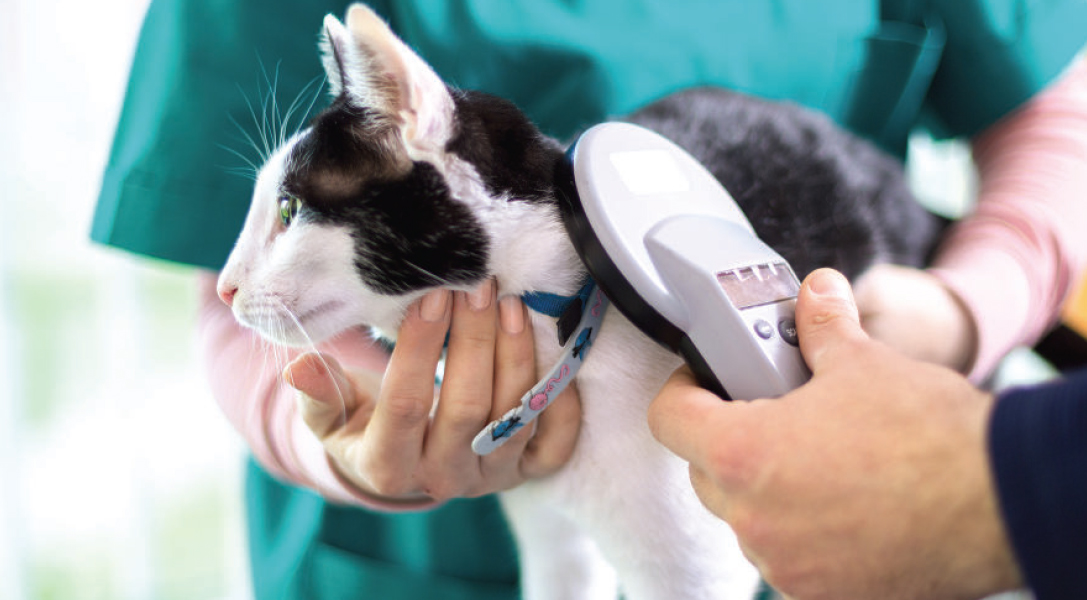
By law, all cats must now be implanted with a microchip before they reach the age of 20 weeks and owners of cats not microchipped could face fines of up to £500. Here’s what you need to know.
What is a microchip? A microchip is a very small device, about the size of a grain of rice, that contains a unique number linking a pet to their owner. It is implanted under the skin between the shoulder blades using a needle. Once microchipped, owner contact details and the pet’s unique identification chip number are stored in a pet microchipping database to help reunite lost, stolen or injured pets with their owners.
Does microchipping hurt? Many pets barely react to being microchipped as the area of skin where implantation is done is near the ‘scruff’ of the neck where the skin tends to be looser. It can cause a small amount of discomfort, but fortunately it’s a very quick procedure that takes just a few seconds. Microchips are made out of non-reactive materials, so once in place it shouldn’t hurt or cause any problems.
Where can I get my pet microchipped?Microchips can only be implanted by vets, veterinary nurses, and people who have been specially trained. Most owners get their pets microchipped at the vets, but if you go elsewhere it’s important to make sure the person chipping your pet is qualified to do it and can provide evidence that they’ve completed a DEFRA approved training course and received their certificate of competence.
How do I register my pet’s microchip? The professional that microchips your pet may pass your details to your microchip database company and register your details, or they may provide you with the documentation so that you can register your pet yourself. To register your details they will need your name, address, phone number, pet’s details, email address and alternative emergency contact telephone numbers.
How long do microchips last? Microchips are hardwearing and should last for your pet’s lifetime. In the very rare case that one fails (meaning it can’t be read by a scanner anymore) a replacement can be fitted without removing the old faulty chip; your vet can simply place the new chip in alongside it.
What should I do if I re-home or sell my pet? If you rehome or sell a pet, you need to contact the microchip database company to let them know. They will give you a form or code to pass on to your pet’s new owner, enabling them to change the details on the microchip. This process is designed to prevent people from changing a pet’s microchip details without the owner’s permission.
For more information visit pdsa.org.uk/cats. The People’s Postcode Lottery helps the PDSA reach even more pet owners with vital advice and information. www.pdsa.org.uk