
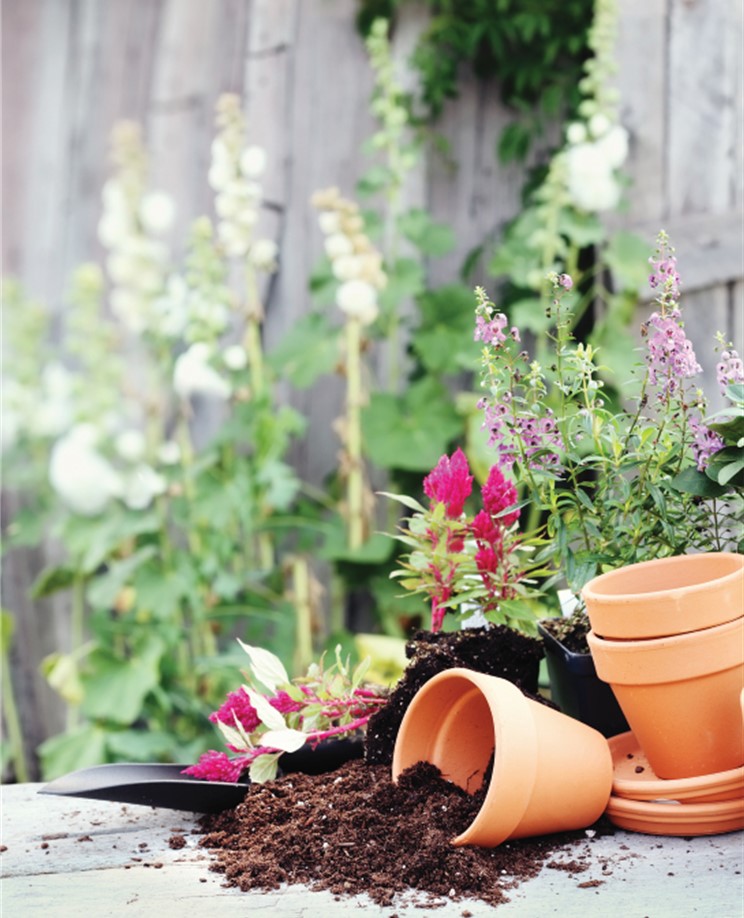
There is little point in creating a wonderful design for your herbaceous border if your plants keel over and die because you haven’t prepared, planted and nurtured them, or worse still, planted them in a location that has conditions they do not like and so pine away, despite all your hard work.
With the soil properly prepared – weed free, and with some fertilizer or well-rotted horse manure dug into the soil – it’s time to get the plants. What you are looking for is a plant that looks healthy and chipper. It’s usually pretty obvious in a group of plants which look the best – but don’t just go for the biggest or those in flower.
Once you’ve got them home, unless the pots are already very wet, give all the plants a good drink to get them in peak condition before planting. Starting at one end of a bed and working along it, always be careful not to walk back onto plants that have been stood out.
For each plant, dig a hole that is wide enough to take the roots without cramming them, and just so deep that, once a dose of manure has been added and the plant root ball placed in the hole, the top of the root ball will be at soil level once the hole is filled in again. Also, if you have clay soil, always loosen the sides of the hole to help the roots penetrate as they grow.
With the perfect hole dug, add half a spade’s worth of well rotted organic manure and mix it with the soil at the bottom of the hole. You can also add a dusting of blood, fish and bone.
The next thing to add is the plant. Knock it out of its pot – gently – and insert into the hole. If there is growth, give it a turn or two to make sure the ‘face’, the best side of the plant, is showing to the front.
Make sure the plant is upright, and if it’s a tall or floppy one, then it’s a good idea to put the support, such as bamboo canes or specialist frames, into the ground now.
Then gently firm the soil around the plant, and give it a good water in. Once the whole border is planted, you can also add a 5-7cm top dressing or mulch of well rotted manure, which will help to improve soil quality, prevent weed growth, retain moisture, and provide extra nutrients throughout the summer.
The main killer of newly planted herbaceous perennials is water stress. Make sure that newly planted borders are kept moist all summer. Come late August, scatter some fertilizer over the ground so that the plants can have a last good grow while preparing themselves for hibernation throughout the winter.