
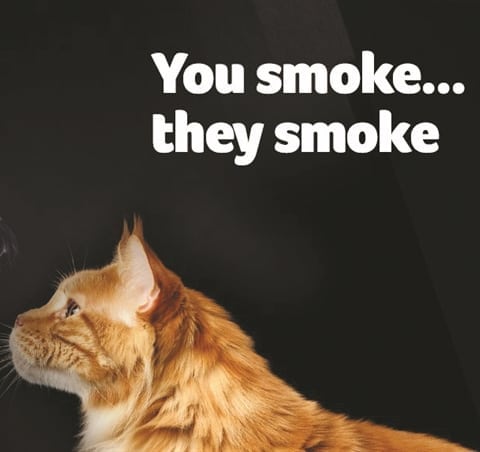
The PDSA has launched a campaign urging smokers to stop lighting up around their pets – as it warned the toxic fumes could kill or harm them.
The negative effects of second-hand smoke on humans are well known, but the impact passive smoking can have on our pets is something that smokers often underestimate, or might not consider at all.
Studies show that animals who are exposed to smoke are at a higher risk of developing respiratory disease and some cancers. It can also make existing lung conditions, such as asthma, much worse.
PDSA Vet Olivia Anderson-Nathan, said: “Many pet owners are unaware of the risks that smoking around their pets have on their health. If they knew I’m sure they would want to take measures to protect them.
“Recent scientific studies have found that family pets can be affected by passive smoking. Vets regularly see the devastating impact smoking can have on pets, from respiratory problems like asthma and chronic coughing through to more serious conditions such as cancers like lymphoma, which in cats is twice as likely if they have exposure to cigarette smoke.
“Thanks to funding from players of People’s Postcode Lottery we’ve launched a campaign to tackle this issue. We want pet owners to realise that if they smoke, their pets smoke too.”
Passive smoking in dogs is linked to the onset of breathing problems and there are links between breathing in passive smoke and difficult-to-treat nasal and sinus cancers in longer nosed breeds, and lung cancer in other breeds. In cats, their grooming habits mean that once smoke lands on their fur, they can swallow the harmful chemicals through licking.
Cigarette smoke can also be harmful to pet birds and small pets (such as guinea pigs and rats), as they have sensitive respiratory systems. Pet owners can reduce the risk to their pets by smoking outside, away from their pets, or by stopping smoking altogether.
PDSA is the UK’s leading vet charity. We’re on a mission to improve pet wellbeing through prevention, education and treatment. For more information and pet health advice visit www.pdsa.org.uk .