
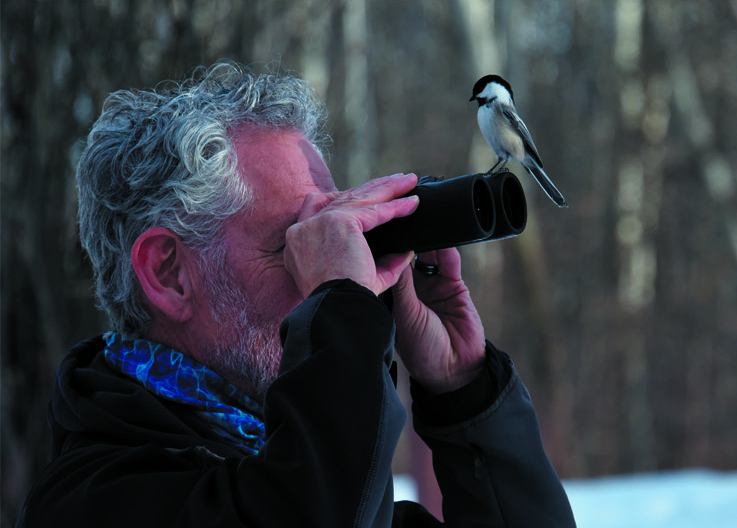
You don’t need a swish pair of binoculars, a country estate or a particularly impressive knowledge of birds to become a birdwatcher. In fact, you don’t even need to leave the house. Your garden, balcony or local park is enough to get started – and winter is an excellent time to begin.
Birdwatching is essentially about paying attention, even on the busiest days. Once you start looking, you’ll probably realise that there are far more birds around you than you ever noticed before. Blackbirds, robins, blue tits, wood pigeons and sparrows may be familiar, but learning to recognise a few less obvious visitors can make an ordinary walk considerably more interesting.
Start close to home
Your garden is a good place to begin. Put out some bird food and provide fresh water, then sit somewhere you can see the feeding area without frightening your visitors away. Don’t worry if you can’t identify everything immediately. Try noticing size, colour, shape, behaviour and where the bird is feeding.
Winter is particularly good for garden birdwatching because deciduous trees have lost their leaves, making birds easier to spot. You may also see species that don’t visit during the warmer months.
Get some equipment – but don’t go mad!
A pair of binoculars can make birdwatching much easier, but there’s no need to spend a fortune when you’re starting out. A basic pair will allow you to see details that are difficult to spot with the naked eye.
A bird identification book or app can help too. Choose one with clear photographs and information about size, habitat and behaviour. Take a photograph if you can, or make a note of what you saw, where you saw it and what it was doing. Identifying birds gets surprisingly addictive once you start keeping a list.
Learn a few at a time
Don’t attempt to learn every British bird in one go. Start with the common species you’re likely to encounter regularly and gradually add to your list. Before long, you’ll recognise a robin from its shape and movement before you’ve even noticed its red breast.
And don’t forget to listen. Birds are often heard before they’re seen, and learning a few distinctive calls can transform your walks.
Go for a walk
Once you’ve mastered the regulars in your garden, try your local park, woodland, riverbank or nature reserve. Walk slowly, stop frequently and look up into the trees as well as around the ground. Birdwatching isn’t about covering miles; it’s about noticing what is around you. Take time to pause at hedges, ponds and patches of scrub, where smaller birds can easily be missed.
Early morning is often a rewarding time to go, when birds are active. But there’s no need to set an alarm if that doesn’t suit you. A quiet afternoon walk can still produce plenty of sightings.
You might find yourself more observant generally. A walk that used to be simply a walk suddenly has a soundtrack, unexpected visitors and plenty of small discoveries.
And perhaps that’s the best thing about becoming a birdwatcher. There’s no test to pass, no club to join and no particular level you have to reach. Just look, listen and see what you can find. You may be surprised at how quickly the birds you once barely noticed become familiar friends.