
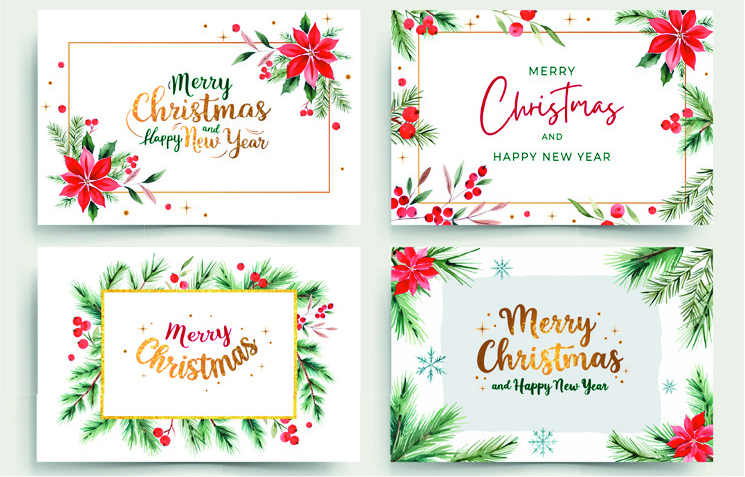
There was a time when the weeks before Christmas meant one thing besides present buying and battling with the supermarket crowds: the arrival of the Christmas cards. The mantelpiece would gradually disappear beneath a colourful collection of snowy scenes, robins and glitter, while strings of cards appeared around doorways and across mirrors.
Today, however, the Christmas card seems to be disappearing. Rising postage costs, concerns about paper waste and the environmental impact of producing and sending cards have all played their part. For some, they simply feel a little old-fashioned in an age when a Christmas message can be sent instantly to hundreds of people with the click of a button.
And yet, perhaps we shouldn’t be quite so quick to consign them to history.
The first Christmas card is generally credited to Sir Henry Cole, a civil servant and founder of what became the Victoria and Albert Museum. In 1843, he commissioned artist John Callcott Horsley to design a card that could be sent to friends and acquaintances. It showed a family raising a toast, surrounded by scenes of people helping the poor, with the simple greeting ‘A Merry Christmas and a Happy New Year to You’.
Around 1,000 of the cards were printed and sold for one shilling each – considerably more expensive than a modern Christmas card, although the idea caught on. As printing techniques improved and postage became cheaper, sending cards became increasingly affordable, and the tradition spread rapidly.
By the Victorian era, Christmas cards had become big business. Designs ranged from traditional religious scenes to flowers, animals, landscapes and increasingly elaborate illustrations. The Victorians were also rather fond of the bizarre, so cards featuring frogs, mice, dead birds and other unusual subjects were not uncommon.
Over the decades, the Christmas card became much more than a seasonal greeting. It was a way of keeping in touch with people we might not see regularly. Friends who had moved away, distant relatives and former colleagues could all be reminded that they were still thought of at Christmas.
Perhaps that is what makes receiving a card today feel surprisingly special. An email or social media message can be lovely, but it is easily lost among hundreds of other notifications. A card has been chosen, written, addressed, stamped and delivered. Someone has taken the time to do all those things simply to say, “I’m thinking of you.”
There is also something rather wonderful about rediscovering a box of old Christmas cards. They become a small record of our lives – familiar handwriting, old addresses and messages from people we may no longer see. Some cards even bring back memories of those who are no longer with us.
Of course, there is nothing wrong with sending a digital Christmas message, particularly when it means staying in touch with people around the world. Perhaps the answer isn’t to choose between old and new, but to use both.
So, if you still have a list of Christmas cards to write this year, don’t regard it as an outdated chore. Put the kettle on, find a comfortable chair, choose your favourite cards and take a little time to write them.
In an increasingly busy world, there is something rather lovely about an envelope arriving through the letterbox simply to remind us that somebody, somewhere, is thinking of us.